·4 min read
When to Start Mowing Your Lawn in Maryland — A Harford County Spring Guide
Cutting too early hurts your lawn. Cutting too late lets weeds win. Here's exactly when to start mowing in Harford and Baltimore County, with the dates and temps that actually matter.
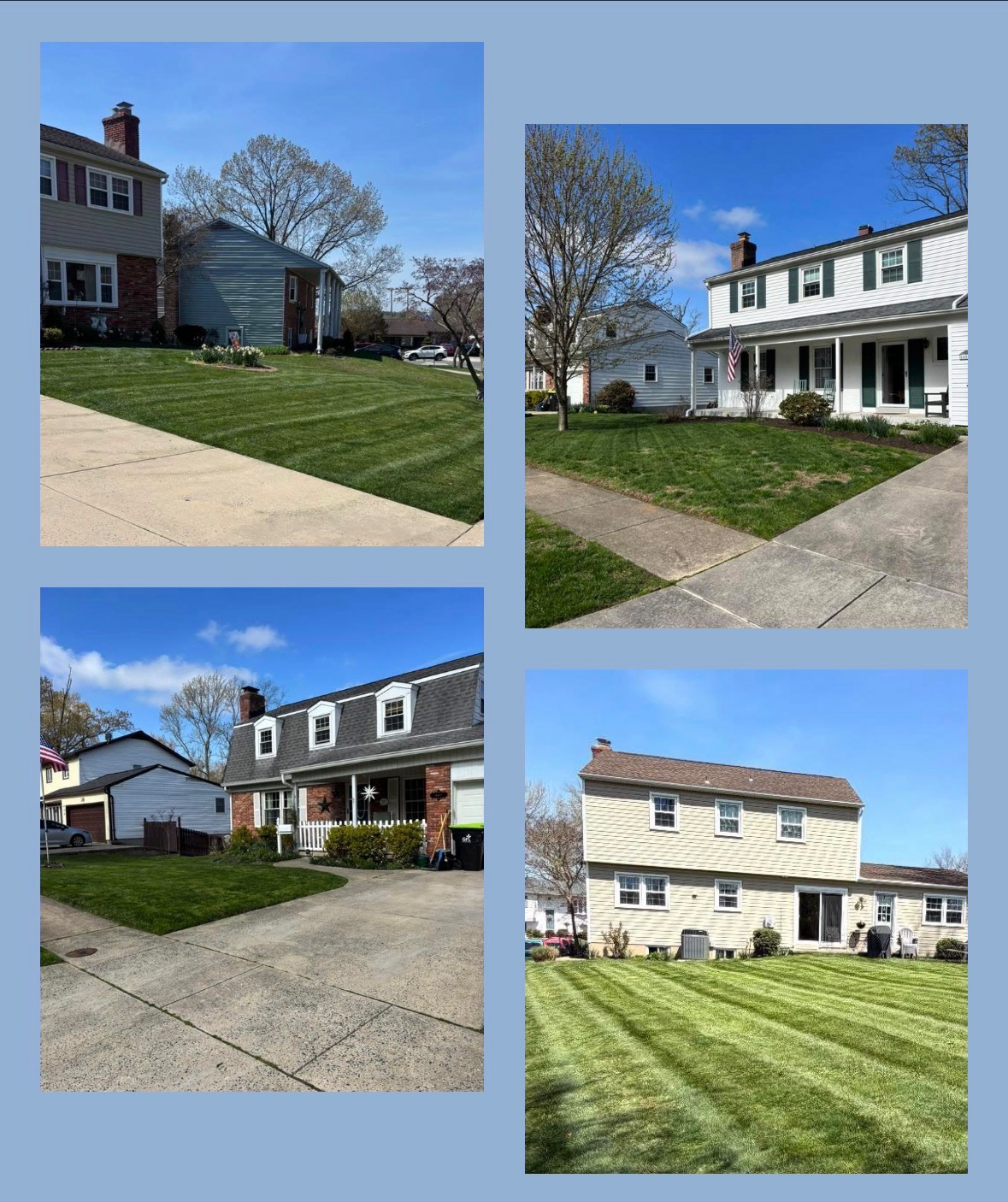
Every March, the same calls start coming in: "Should I be mowing yet?" The honest answer for most Harford and Baltimore County yards is not yet — and starting too early is one of the easiest ways to set your lawn back six weeks.
Here's the actual rule, and the dates that matter for our part of Maryland.
The 50/50 rule
The signal isn't the calendar. It's two numbers:
- Soil temperature ≥ 50°F, sustained for about a week
- Grass height ≥ 50% taller than your target cut height — so 4.5 inches if you mow at 3, ready for a cut down to 3
For most of Harford and Baltimore County (USDA zone 7a/7b), soil hits that 50°F threshold somewhere between April 1 and April 15 in a normal year. After a cold spring, it can be later. After a mild March, mid-March is possible — but rare.
You can buy a soil thermometer at any Harbor Freight or hardware store for under $15, push it 3 inches into the lawn at noon, and read it. That's the most reliable signal you can get.
Why mowing too early hurts
Cutting cool-season grass (the tall fescue and Kentucky bluegrass that dominate Maryland yards) before it's actively growing does three things:
- Slows root development. The grass is still pushing energy into roots in early spring. Cutting blade tissue forces it to redirect that energy upward, leaving you with shallower roots that struggle in summer.
- Stresses dormant turf. Cold-stressed grass that gets cut bleeds out — literally. The wounds heal slowly because there's not enough soil warmth for cellular repair.
- Compacts wet soil. Maryland soil is heavy clay in most of Harford and Baltimore County. Driving a 600-pound mower over it when it's still saturated from spring rains compacts the top inch and chokes the root zone for the rest of the season.
The yards that look best in July are the ones whose owners waited in April.
The first cut: how high, how often
When you do start, your first cut sets the tone for the whole season.
- Cool-season grasses (tall fescue, KBG, ryegrass) — most Maryland lawns: cut at 3 to 3.5 inches for the first mow, never lower than 3.
- Warm-season (bermuda, zoysia) — less common here: 1.5 to 2 inches, and don't start until the grass is actively green-greening, usually late April or May.
- The 1/3 rule: never remove more than one-third of the grass blade in a single cut. If your lawn shot up to 6 inches while you were waiting, mow it down to 4 first, wait 4–5 days, then mow again to 3.
Following the 1/3 rule keeps the grass photosynthesizing properly between cuts. Breaking it shocks the plant and is the #1 reason lawns get pale or yellow after the first spring mow.
Cool-season vs. warm-season: how to tell what you have
Almost every yard in our service area is cool-season, but if you're not sure, here's the quick test:
- Cool-season grass stays green through April when warm-season is still tan.
- Cool-season has a finer, softer blade. Warm-season feels stiffer and looks slightly bluer.
- Warm-season often takes until May to fully green up.
If your neighbor's yard is green and yours is still brown in mid-April, you might have warm-season grass — or your lawn might be stressed from last summer and need overseeding (a service we handle).
The other thing to check before you mow
Before the first cut, walk the yard and look for:
- Pencil-sized holes: vole tunnels from the winter. Patch with topsoil before you mow.
- Matted gray patches: snow mold. Rake gently to fluff the blades; usually clears with sunlight.
- Heaved sod: clay soil pushes plant roots up over winter. Press it back down with your foot.
- Sticks and debris: a single stick can kick a mower blade out of balance and ruin both blade and yard.
A 5-minute walk-through saves a lot of headache mid-mow.
When to call us instead
If any of these apply, it's worth a free estimate before you start the season DIY:
- Lawn looks more brown than green by April 20
- Bare patches bigger than a dinner plate
- Crabgrass or thick weed coverage from last year
- You missed last fall's leaf cleanup and have a layer matted under the snow
- Sloped or wet sections where pushing a mower is dangerous
We do weekly and bi-weekly residential mowing throughout Harford County, Baltimore County, and Baltimore City. First-cut spring service includes the 1/3-rule double-pass if needed, edging along walks and beds, and a full blow-down of clippings off your hard surfaces. No hidden fees.
Quick rule for 2026: target your first cut between April 5 and April 18 in Harford County, give or take a week for elevation. South-facing yards on the lower side, north-facing or wooded yards on the higher side. When the soil thermometer hits 50°F and the grass is at 4.5"+, you're clear.
That's the season starter. Get the first cut right, follow the 1/3 rule, and you set yourself up for a yard that actually holds through July's heat.
Related: Mowing & Edging
Skip the DIY. We'll handle the mowing & edging.
Free estimates, same-week start, work you can point at. Serving Harford County, Baltimore County & Baltimore City.