·5 min read
Why Your Maryland Lawn Has Brown Spots (And How to Fix Each Cause)
Brown patches in Maryland yards have six common causes, and they're all fixable. Here's how to ID what's actually wrong with your lawn before you waste money on the wrong treatment.
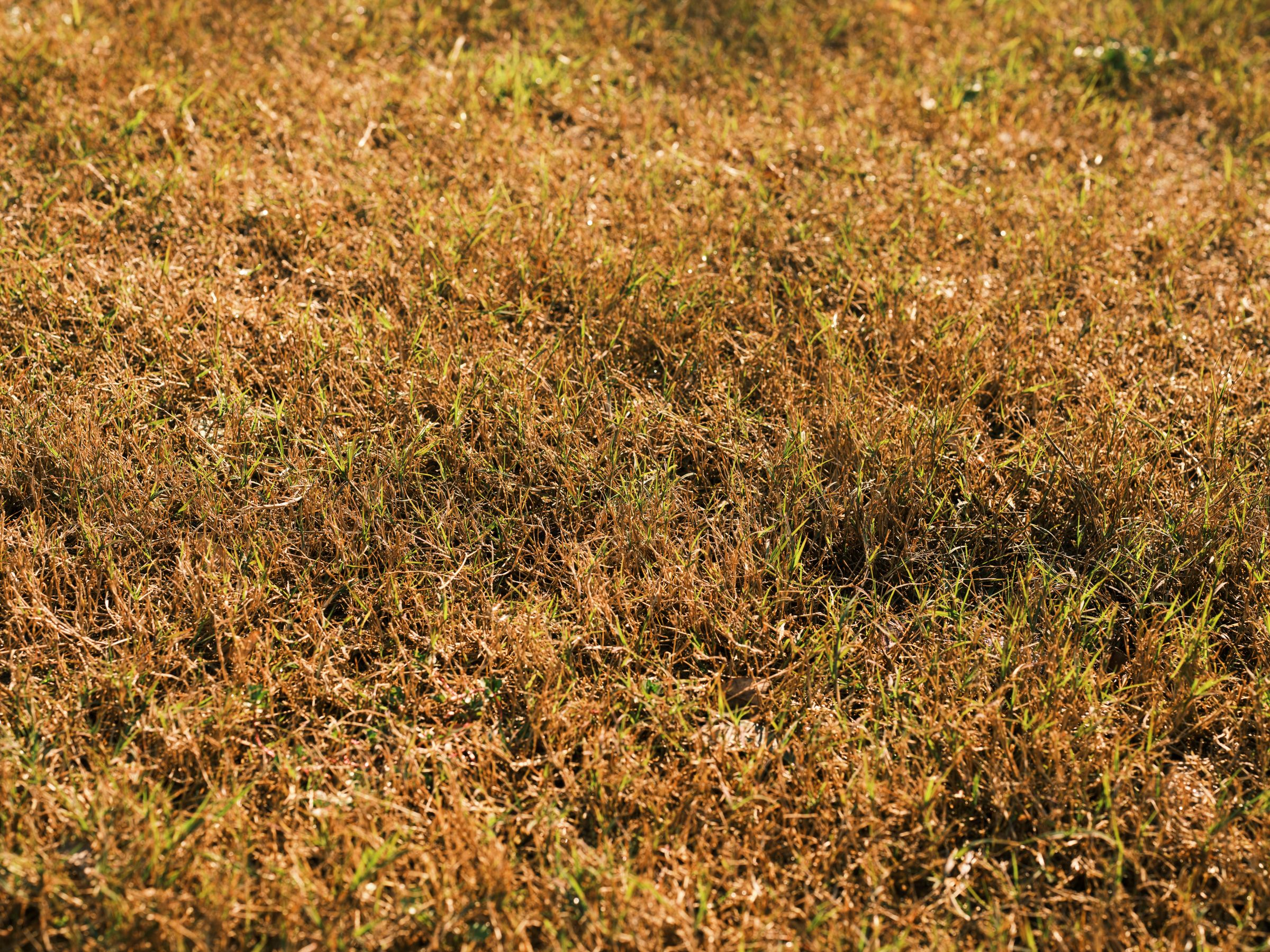
Six things cause most of the brown patches we see in Harford and Baltimore County yards. They look superficially similar from the porch — but they need completely different fixes, and treating the wrong cause can make the actual problem worse.
Here's how to ID what you're actually looking at, and what to do about each one.
Cause 1: Drought stress (the most common)
What it looks like: Patches start in the same general areas every summer — usually slopes, south-facing exposures, or anywhere clay soil is shallow. Grass goes from green to dull blue-green to straw-tan over 7–14 days. Crinkly to the touch.
Why it's happening: Maryland gets about 44 inches of rain a year on average, but it doesn't fall evenly. July and August can stretch 3+ weeks with under an inch of rain while the heat index hits 95°F+. Cool-season grass (the tall fescue dominating most of our area) goes dormant to survive — not dead.
The fix:
- Don't mow it short. 3.5 to 4 inches lets the grass shade its own roots and lose less water.
- Water deeply, less often. One inch of water per week, all at once, is dramatically better than 15 minutes every day. Deep water = deep roots.
- Stop fertilizing. Pushing nitrogen onto a stressed lawn is like force-feeding someone with the flu. Wait until September.
- Tolerate brown. Healthy fescue can stay tan for 4–6 weeks of dormancy and bounce back fully when rains return. It's not dead.
If patches don't recover by late September even after rain comes back, it's probably one of the other causes below.
Cause 2: Grub damage
What it looks like: Patches that feel spongy underfoot. You can grab the tan grass and roll it back like carpet because the roots are gone. Often appears August through October. Birds, raccoons, or skunks tearing up the lawn at night is a strong tell — they're after the grubs.
Why it's happening: Japanese beetle and June bug grubs hatch in early summer and feed on grass roots underground. Maryland clay soils with thatch above an inch are especially attractive to them.
The fix:
- Confirm first. Cut a 1-foot square of sod with a shovel and lift. If you see 6+ white C-shaped grubs, you've got an infestation.
- Treat in July or August with a curative grub control (containing carbaryl or trichlorfon). Preventatives applied in May/June are best for next year — too late once damage is visible.
- Reseed after. Grub-killed turf doesn't come back on its own. Overseed in September with tall fescue blend.
Cause 3: Brown patch fungus (summer disease)
What it looks like: Roughly circular patches 1–3 feet across. Edges sometimes have a darker "smoke ring." Often appears after a humid stretch with night temps over 70°F. Grass blades have small water-soaked lesions if you look up close.
Why it's happening: Brown patch (Rhizoctonia solani) thrives in Maryland's summer humidity, especially on tall fescue lawns watered late in the evening. The grass stays wet overnight, fungus blooms, ring grows.
The fix:
- Water early morning only (5–8 AM). Gives blades time to dry before nightfall.
- Don't fertilize in summer. Excess nitrogen feeds the fungus.
- Improve airflow. If patches are under tree drip lines or against fences, prune to open the area up.
- Fungicide as a last resort. Granular brown patch fungicides work but need to be applied at the right cycle. We can recommend an applicator if it's bad.
Cause 4: Pet urine
What it looks like: Bright dark green ring around a tan or burnt center. Almost always near a path the dog uses repeatedly.
Why it's happening: Concentrated nitrogen and salts from urine burn the grass at the application point but fertilize the surrounding ring.
The fix:
- Water the spot heavily right after the dog uses it. Dilution is the only real solution.
- Pick spots in mulch or gravel the dog can use instead of grass.
- Reseed dead spots with the same grass blend in fall.
- Skip the supplements. Pills marketed to "neutralize" dog urine mostly don't work and some are bad for the dog.
Cause 5: Compacted soil
What it looks like: Generally thinning, shallow-rooted patches that don't recover after good rain. Usually in high-traffic lanes — kid play areas, cars parked on grass, dog runs along the fence.
Why it's happening: Maryland clay compacts under repeated weight. Compacted clay can't hold air or water, so roots can't penetrate and grass thins from the ground up.
The fix:
- Core aeration in fall (September–October). A core aerator pulls finger-sized plugs out of the soil, opening channels for air and water. Far more effective than spike aeration.
- Overseed immediately after. The aeration holes are perfect seed beds.
- Topdress with quarter-inch of compost for chronically compacted areas. Improves soil structure over 1–2 seasons.
- Stop driving on it. Permanent fix for car-parking spots is gravel or pavers, not just better grass.
Cause 6: Bad mow practices
What it looks like: Yellow tinge across the whole lawn after each cut, or scalped low spots where the mower bottoms out on every uneven patch.
Why it's happening:
- Mowing too short (under 3" for cool-season grass)
- Dull blades that tear instead of cutting cleanly
- Mowing wet grass and matting it down
- Skipping weeks and then violating the 1/3 rule
The fix:
- Mow at 3 to 3.5 inches for tall fescue.
- Sharpen blades twice a season — early spring and mid-summer.
- Mow weekly during peak growth (May–June, September–October).
- Mulch don't bag for free nitrogen back to the lawn.
How to ID what you actually have
- Walk the patch. Spongy = grubs. Crinkly tan = drought. Wet at base of blades on a humid morning = fungus.
- Look at shape. Circular with smoke ring = brown patch fungus. Random patches over slopes = drought. Concentrated rings = pet urine.
- Time of year matters. August spongy patches with bird activity are grubs. July round patches in humid weeks are fungus. September thinning is compaction.
- Pull a plug. Dig a 6-inch core. Look at root depth. Less than 2 inches of root = compaction or grubs. Healthy roots, dry soil at depth = drought.
When to call us
If you've got persistent brown patches that haven't recovered after correct identification and treatment, or if you can't tell what you're looking at, we can walk the property and tell you in 10 minutes. Free, no upsell.
Most yards we see have two or three of the above happening at once — drought-stressed turf with patches of compaction in the high-traffic spots, plus a dog spot or two. Once you know what you're treating, the fixes are cheap and seasonal. Treating the wrong cause is what burns money.
Diagnostic shortcut: Walk your yard one cool morning. If the patches are crinkly underfoot, it's drought. Spongy, grubs. Round with rings, fungus. Bright-green-haloed, pet urine. Same lanes year after year, compaction. Match the pattern, treat that cause, ignore the others.
Related: Mowing & Edging
Skip the DIY. We'll handle the mowing & edging.
Free estimates, same-week start, work you can point at. Serving Harford County, Baltimore County & Baltimore City.