·6 min read
Tall Fescue vs. Kentucky Bluegrass — Which Grass Wins in Baltimore County's Climate?
Most Baltimore County yards have one of three grass types — but the wrong one in the wrong spot is why your lawn struggles. Here's how to tell what you have, what each one actually wants, and when to switch.
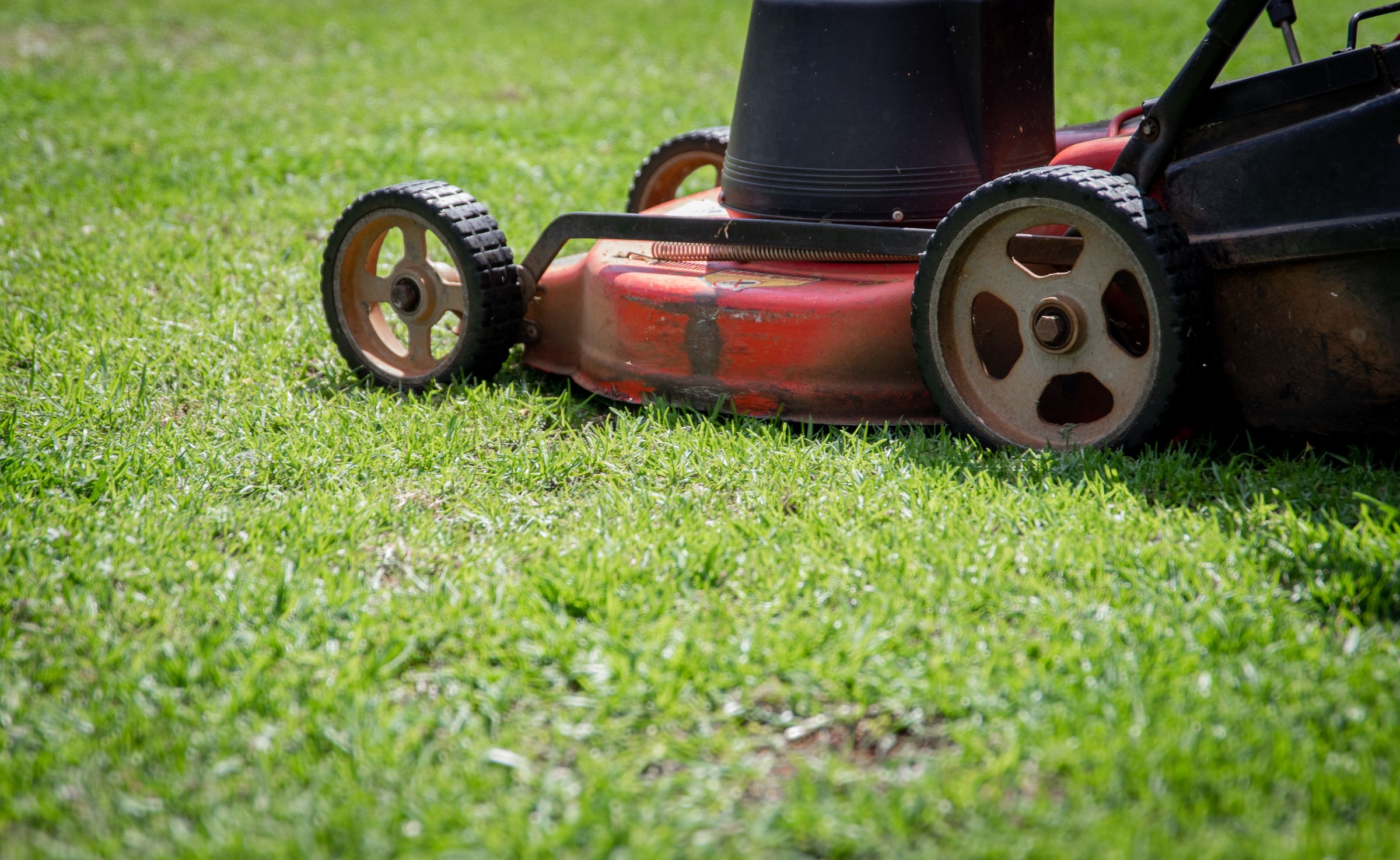
Almost every residential lawn in Baltimore and Harford counties is one of three grass types. The right one for your yard depends on sun exposure, soil type, and how much wear it takes — and the wrong one in the wrong spot is why so many lawns struggle no matter how much you spend on them.
Here's how to ID what you have, what each grass type actually wants, and when it's worth ripping one out and switching to another.
The three grasses you probably have
Maryland sits in the transition zone — too cold for the warm-season grasses common in the South (Bermuda, Zoysia), too hot in summer for the cool-season grasses common in the North (perennial ryegrass dominance). What does well here:
- Tall fescue (most common, 80%+ of yards we see)
- Kentucky bluegrass (second most common, often blended with fescue)
- Zoysia (uncommon but increasing — usually a deliberate replacement choice)
Almost every other grass — perennial ryegrass alone, fine fescue, Bermuda — exists here but isn't dominant in residential settings.
How to tell what you have
The 30-second test:
- Tall fescue: Wide, slightly waxy blades. Coarse to the touch. Bunch-forming (clumps that don't spread easily). Stays green deep into fall, recovers quickly from drought.
- Kentucky bluegrass: Narrow, soft blades. Boat-shaped tip (look at a single blade — the tip slightly curves into a boat shape). Spreads via underground rhizomes — fills in bare spots without seeding.
- Zoysia: Very fine blades. Mat-forming (you can pull up entire sheets of it like carpet). Goes dormant tan in winter, greens up late spring.
- Bermuda: Fine blades like zoysia, but more aggressive. Stolons (above-ground runners) creep across hardscape and into beds. Goes dormant tan November–April.
Most "fescue" lawns are actually a fescue/bluegrass blend at 70/30 or 80/20. The blend is intentional and good — fescue's deep roots plus bluegrass's spreading habit fill in bare spots fescue alone leaves.
Tall fescue: the workhorse
Why it dominates Maryland: Tall fescue evolved in the European/Mediterranean climate that closely resembles our transition zone. Deep root system (12–18 inches in healthy soil) lets it tolerate Maryland's summer drought stretches. Tolerates clay better than most cool-season grasses.
Best for:
- Full sun to moderate shade (handles 4–6 hours of direct sun)
- Average to heavy clay soil
- Most slope orientations
- Lawns with moderate foot traffic
What it doesn't love:
- Deep shade (under heavy tree canopy with under 4 hours sun)
- Constant heavy traffic (bunch-forming, doesn't fill in worn spots quickly)
- Wet, poorly-drained soil
Cut height: 3 to 3.5 inches in spring/fall, 3.5 to 4 inches in summer
Watering: Deep soak (1 inch) once per week is dramatically better than frequent light watering. Drought-dormant tan but recovers from rain.
Modern fescue blends: Look for "turf-type tall fescue" (TTTF) blends with multiple cultivars — these are dramatically more disease-resistant than older fescue varieties. K-31 fescue (the cheap stuff) is fine for naturalized areas but produces a coarse, sparse lawn.
Kentucky bluegrass: the spreader
Why people mix it in: Bluegrass spreads via rhizomes underground, so it fills in bare spots that bunch-forming fescue can't. It also has finer texture — a pure bluegrass lawn looks like a putting green, soft underfoot.
Best for:
- Full sun (8+ hours direct) — needs more sun than fescue
- Well-drained loamy soil
- Lawns getting weekly irrigation (it's thirstier)
- Properties where appearance matters more than drought tolerance
What it doesn't love:
- Maryland's clay soil unsupplemented (needs amendment)
- Heavy summer drought without watering (goes dormant much faster than fescue)
- Heavy shade
- Compacted soil
Cut height: 2.5 to 3 inches
Watering: 1.5 inches per week through summer, supplemented as needed
In our service area, pure bluegrass lawns are the exception — the high water requirement makes it a luxury without irrigation. Bluegrass blended into fescue (10–30% bluegrass in the mix) is the common, and good, approach.
Zoysia: the slow comeback
Why people choose it: Zoysia is warm-season, so it goes dormant in winter (tan November–April) but is bulletproof in summer. Doesn't need watering once established. Mat-forming so it crowds out weeds. Tolerates heat that browns fescue.
Why it's not more common: 5+ months of tan dormancy is a lot for most homeowners. The "lawn looks dead from October to May" is the dealbreaker.
Best for:
- Sunny lawns (zoysia needs full sun)
- Low-water budgets
- Homeowners who don't mind tan winter color
- Neighborhoods where everyone else has zoysia (so dormancy doesn't stand out)
What it doesn't love:
- Shade
- Wet feet
- Cold-damaged spots that thin and need replanting
- Fast establishment — sodding is the only practical install (seeding takes 3+ years to fill in)
We see zoysia mostly in older Baltimore County neighborhoods (Towson, Catonsville, Pikesville) where it was popular in the 70s. Newer construction goes back to fescue.
When the wrong grass is in the wrong spot
The clearest sign you have the wrong grass:
- Persistent thinning under trees: probably fescue trying to be a shade grass. Switch to fine fescue blend or accept the thin look as natural.
- Brown-out every July despite watering: probably bluegrass-heavy in clay soil. Overseed with tall fescue and shift the blend toward fescue dominance.
- Tan lawn from October to May: that's zoysia. If you want winter green, full removal and reseed/sod with cool-season is the only fix. Multi-year project.
- Aggressive spread into beds and hardscape: that's Bermuda. Bermuda is technically grass but it's also a weed in our climate. Removal usually requires multiple herbicide applications across a season.
Mixed lawns: when to embrace, when to fix
If your lawn has multiple grass types — fescue here, bluegrass there, a patch of crabgrass that's becoming permanent — embrace it as a "transition zone reality." A 70/30 fescue/bluegrass with seasonal overseeding is healthy and what most lawns should look like.
What to fix:
- Bermuda creeping in: remove aggressively before it takes over
- Crabgrass dominance: pre-emergent herbicide in spring + fall overseed with tall fescue
- Significant zoysia mixed with fescue: usually unfixable short of full renovation
Renovation: when to start over
Sometimes the best move is starting from scratch. Signs your lawn needs renovation, not maintenance:
- 50%+ weeds even with treatment
- Severely compacted in most of the yard
- Wrong grass type for the conditions (Bermuda dominance, mixed weed/crabgrass mat)
- Last fertilization or seeding 5+ years ago and the lawn shows it
Renovation timeline:
- Late August: kill existing lawn with glyphosate
- Early September: dethatch and aerate
- Mid September: seed with appropriate blend
- Mid October: starter fertilizer + overseed any thin spots
- Late October: winterizer fertilizer
- Following April: first regular mow
Cost depends on yard size, but a typical 1/4-acre renovation runs $1,500–$3,500 vs. $300–600/year of maintenance fighting bad turf. Often the renovation pays back in 2–3 years.
Quick reference: pick by sun
If you're trying to pick a grass for a renovation or a problem area:
| Sun | Best choice |
|---|---|
| 8+ hours full sun | Tall fescue dominant blend OR Kentucky bluegrass (with irrigation) OR zoysia (if dormant tan is OK) |
| 6–8 hours, mostly sunny | Tall fescue blend with 20–30% bluegrass |
| 4–6 hours, some shade | Tall fescue dominant, low bluegrass |
| 2–4 hours, mostly shade | Fine fescue blend (creeping red, hard, sheep) |
| Under 2 hours, dense shade | Skip lawn — go ground cover (vinca, pachysandra) or stone/mulch |
When to call us
We do overseeding, renovation, and grass-type assessment as part of any property visit. Most of our work is on existing tall fescue lawns — keeping them dense, deep-rooted, and weed-resistant — but we also handle full renovations when that's the right call.
Free yard walk-through tells us what you have, what's working, what's not. We don't push renovation unless it's the right move; we'd rather you spend $300/year on maintenance for 10 years than $3,000 once if your existing turf is salvageable.
Bottom line: most Baltimore and Harford County lawns should be a tall fescue / Kentucky bluegrass blend at 70/30 or 80/20. Pure fescue works for low-water, pure bluegrass for irrigated showcase lawns, zoysia for low-water-and-OK-with-tan-winters. Match the grass to the sun and soil; everything else gets easier.
Related: Mowing & Edging
Skip the DIY. We'll handle the mowing & edging.
Free estimates, same-week start, work you can point at. Serving Harford County, Baltimore County & Baltimore City.