·5 min read
Black vs Brown Mulch in Maryland — Which One Actually Lasts Longer?
Black mulch fades faster, but it's not a wash. Here's what actually happens to dyed and natural mulch through a Maryland year, and how to choose the one that fits your yard.
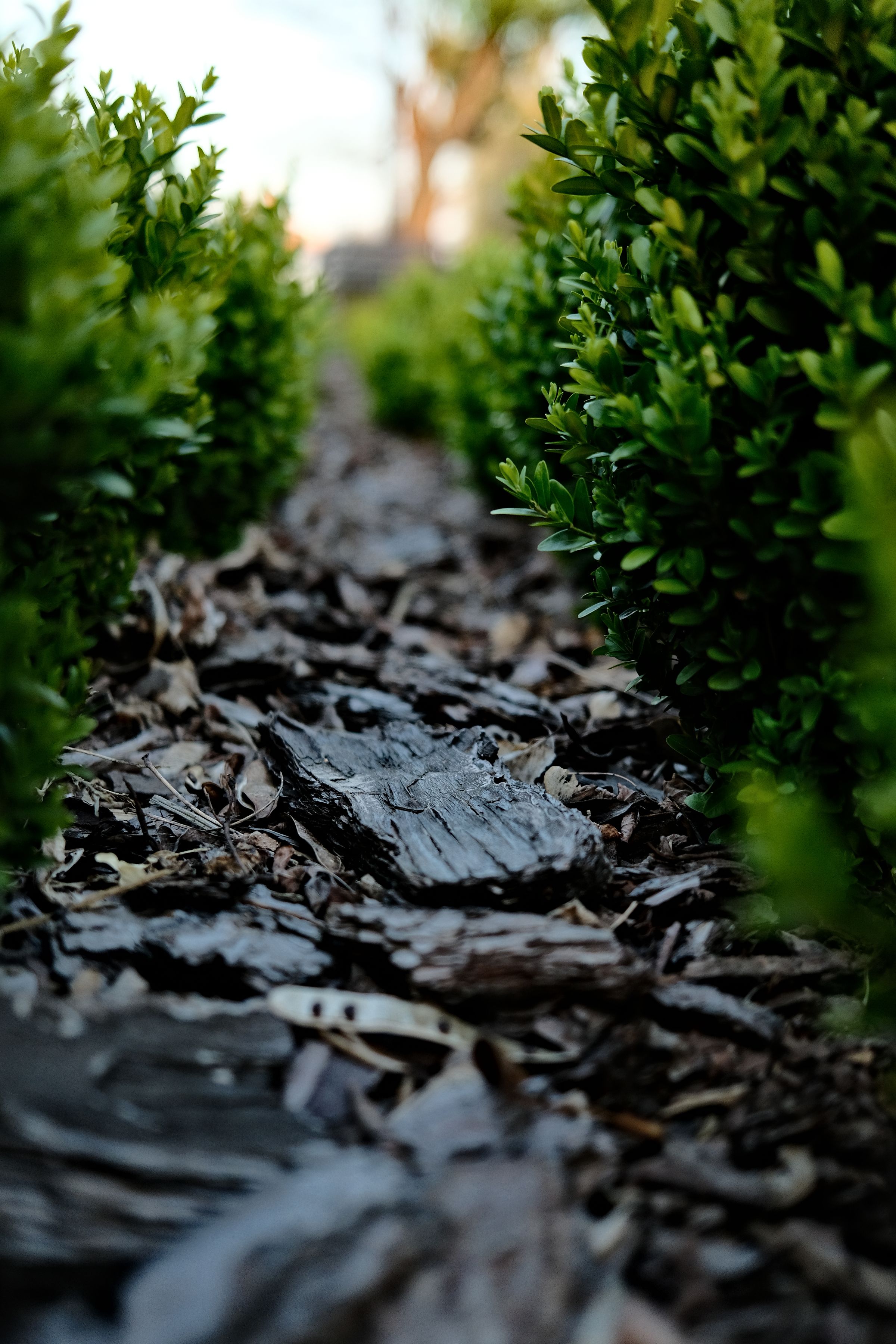
Customers ask this every spring: black or brown? Most assume it's purely cosmetic. It's not. The two age very differently in Maryland's UV, rain, and heat — and the right pick depends on whether you re-mulch every year or every other year.
Here's what actually happens to each over 12 months in a typical Harford or Baltimore County bed.
The four mulches you'll actually choose between
Forget the 30 SKUs at Home Depot. In our area, four products cover 95% of residential beds:
- Dyed black mulch (hardwood, color-coated)
- Dyed brown / mahogany mulch (hardwood, color-coated)
- Natural hardwood mulch (uncolored, ages to gray)
- Pine bark nuggets (light brown to red, ages to silver)
We'll cover all four below. The question of "black or brown" usually means dyed black vs. dyed brown — those are the two we'll focus on first.
What "dyed" mulch actually is
Dyed mulches are wood (usually recycled pallet wood or hardwood chips) sprayed with vegetable-based or iron-oxide-based colorant. The color is on the surface, not throughout the chip.
Two implications:
- The dye fades. UV breaks down the color over time. The chip underneath is the same gray-brown either way.
- The dye is largely safe but not zero-risk. Modern mulch dyes are food-grade colorants. They're fine for ornamental beds, edible-garden adjacency is generally OK, but we wouldn't put dyed mulch directly under fruiting plants or vegetable beds. Use natural for those.
The 12-month timeline: black mulch in Maryland
Month 0 (install, March/April): Deep, almost-black color. High contrast against fresh green growth. Photographs beautifully on listing pictures.
Month 2 (May–June): Still dark. First slight fading on the most sun-exposed edges. Most people don't notice.
Month 4 (July): Sun-bleached on south- and west-facing exposures. Color now ranges from black on shady side of the house to charcoal-gray on the sun-blasted side. Patchy look.
Month 6 (September): Significant fading across most beds. The "freshness" is gone. Looks worn, tired, gray-toned.
Month 9 (December): All beds look about the same — gray-brown, regardless of original color. Indistinguishable from natural hardwood at this point.
Month 12 (next March): You're re-mulching anyway because the color is gone, but the chips themselves are mostly fine — about 60–70% of the original volume remains.
The 12-month timeline: brown mulch in Maryland
Month 0: Rich mahogany. Warmer, less dramatic than black, more "natural" looking.
Month 4 (July): Still recognizably brown. Some fading but it ages toward the original wood color rather than to gray. Less obvious as it shifts.
Month 6 (September): Light brown to tan. Looks like older natural mulch, which is what most people expect to see.
Month 12: Tan-gray. Has aged through colors that all look acceptable. Less of a "this needs re-mulching" signal than black.
So which lasts longer?
Brown mulch ages more gracefully. It fades through colors that all read as "natural mulch." Black mulch fades from "dramatic black" to "gray" — a much bigger visual gap that screams "needs refreshing."
If you re-mulch every spring, both look great in April and you'll re-do them whether you want to or not.
If you re-mulch every other spring (the common cadence for tighter budgets), brown is the clear winner. It looks reasonable through year two; black looks bad after month 8.
When to use natural hardwood mulch
Natural mulch is what we recommend for most homeowners who don't have a strong color preference. Reasons:
- Cheapest. Typically $30–40/yard delivered vs $40–55/yard for dyed.
- No dye to worry about for vegetable beds, kid play areas, near pollinators.
- Ages to silver-gray — not flashy, but always looks intentional.
- Better for soil as it breaks down — the colorant in dyed mulch doesn't help microbial activity.
The only reason to skip natural is purely aesthetic: if you want a designer look on a curated front bed, dyed black or brown gives you a tighter visual.
When to use pine bark nuggets
Pine bark is a different category — coarser, longer-lasting, lighter color. We use it for:
- Acid-loving plants (azaleas, blueberries, rhododendrons) — pine bark is mildly acidic as it decays
- Slopes and erosion zones — chunky nuggets stay put better than fine hardwood
- Decorative stone-adjacent beds where you want texture contrast
It costs more ($45–60/yard) and decomposes slower (lasts 2–3 years vs 1 for hardwood). Less of a yearly chore.
Depth: how thick should you go?
Standard answer is 2 to 3 inches. Real answer: it depends on what's underneath.
- Bare soil first time: 3 inches initially, drop to 2 on refreshes
- Existing 1-inch layer of old mulch: refresh with 1.5 inches of new on top
- Around plants: 2 inches max — NEVER pile against the trunk (more on this in our mulch volcano article)
- Steep slope: 3 inches with a wood-chip nugget for grip
- Adjacent to lawn: 2 inches works; deeper bleeds onto the grass
Going deeper than 3 inches doesn't help and actually starts to harm. Mulch that thick:
- Holds too much moisture against plant crowns (root rot)
- Becomes hydrophobic on top after baking, water sheds off
- Creates a mat that suffocates new perennial growth
What about color volume per yard?
Standard pricing on dyed mulch covers about 75–100 sq ft at 2-inch depth per yard. So a 200 sq ft bed at 2 inches needs roughly 2 yards. Most residential properties take 4–8 yards installed.
Our pricing for 2026 is $85/yard installed, which includes:
- Bed prep (weed pull, edging if needed)
- Delivery
- Spreading and shaping
- Cleanup of any spillage onto walkways
Pure DIY at Home Depot is roughly $40/yard plus $30/hour of your time wheelbarrowing it. Most homeowners do the math and call us.
Quick decision tree
- Designer look, freshen every spring → dyed black or brown (your call)
- Refresh every other year → dyed brown OR natural hardwood (skip black)
- Vegetable beds, kid areas, pollinator gardens → natural hardwood
- Acid-loving plants or slopes → pine bark nuggets
- Tight budget → natural hardwood
- HOA-heavy neighborhood → match what's already in the neighborhood (often dyed brown)
The honest answer for most yards in our area: dyed brown looks great, ages well, refreshes annually with reasonable cost. If your beds are big and you only mulch every other year, switch to natural hardwood — you'll save 30% and the look will be more consistent.
We deliver and install all four products. Free measure-up and quote at your property — most yards we can be there same day. Tell us what aesthetic you're after and we'll point you at the right one for your situation, not the one with the highest margin.
Related: Mulch & Bed Refresh
Skip the DIY. We'll handle the mulch & bed refresh.
Free estimates, same-week start, work you can point at. Serving Harford County, Baltimore County & Baltimore City.